




Según TasteAtlas, usted votó a este como el mejor plato de 2022. Preparemos Karē (versión Katsu) y veamos si está a la altura de su logro.
Katsu Kare (Japanese curry)
Rated 4.8 stars by 29 users, click here to rate this recipe.
Category
Dinner
Servings
4
Prep time
45 minutes
Cook time
45 minutes
Japanese curry is one of those dishes that feels harder than it actually is. We’re going to lean on a packet of S&B Golden Curry for the roux, the same shortcut most Japanese homes use. That leaves us to focus on getting the vegetables tender, the curry the right consistency, and the katsu properly crispy. This is how I make it at home when I want something warming, easy and on the table in under an hour.
Kare Explained
The Curry
We’re going to build the curry on a base of onion, carrot and potato. The onion and carrot start first, sweating down with a pinch of salt to pull out their sweetness before any liquid goes in. Once they’ve softened, the stock goes in and the potatoes follow. A traditional Japanese touch I always include is diced apple, added late in the cook. It gives the curry a soft fruity sweetness in the background without being obvious. The Golden Curry roux only goes in at the very end. Adding it too early can leave the sauce pasty.
The Katsu
For the katsu, we’re cutting chicken breasts in half horizontally so they’re thinner and cook evenly. The crumb is a standard three-stage coating: flour, then beaten egg, then panko. Panko breadcrumbs are larger and more jagged than regular breadcrumbs, which is why katsu has that distinctive shaggy, crunchy crust. We shallow-fry at 170°C (340°F). Too hot and the panko burns before the chicken cooks through. Too cool and the crumb soaks up oil and goes soggy. I always rest the cooked katsu on a wire rack rather than paper towel, which traps steam underneath and softens the crust.
Ingredient Notes
S&B Golden Curry: This is the Japanese curry roux you’ll find in the Asian aisle of most supermarkets. It comes in mild, medium and hot, choose based on how much heat you like. One packet (about 92g) is enough for this recipe.
Apple: Adding apple to Japanese curry is traditional and worth doing. The sweetness and slight acidity round out the curry and stop it tasting one-note. Green apple holds its shape better than red and brings a touch of tartness. Grate it if you don’t want visible pieces in the final dish.
Panko breadcrumbs: These are coarser and flakier than standard breadcrumbs, which is why katsu crumb has that distinctive crunch. Don’t substitute regular dried breadcrumbs, the texture will be wrong. Most supermarkets stock them in the international or baking aisle.
Equipment
Chopping board
Chef’s knife
Large frypan or wide saucepan
Cast iron pan or heavy-based deep pan
Wooden spoon
Tongs
3 shallow bowls (for the crumbing station)
Wire rack
Rice cooker or saucepan with lid
Thermometer
Ingredients
- 2 tbsp grapeseed oil
- 1 brown onion, diced large
- 2 carrots, peeled and diced
- 2 potatoes, diced
- 1 green apple, diced
- 600ml chicken stock
- 1 packet S&B Golden Curry
- 2 chicken breasts, sliced in half
- 200g flour
- 2 eggs, beaten
- 200g panko bread crumbs
- Oil for frying
- 3 spring onions, sliced thin
- Salt to taste
- Steamed rice to serve
Directions
Start by cooking some rice in a rice cooker to serve the curry.
- Heat the grapeseed oil in a large frypan and sweat off the onions and carrots with a pinch of salt.
- Once they start to soften, add the chicken stock.
- Now add the potatoes and simmer for 15 minutes or until the veg is just starting to soften.
- While that is cooking, heat the oil in a cast iron pan for frying the chicken katsu.
- To crumb the chicken, season it with salt and then dust it with flour followed by a dunk in the egg and finally the panko crumbs.
Back to the curry, after the potatoes have been cooking for 15 minutes add the apples.
Once the stock comes back to a boil, add the Golden Curry and stir through. Let it simmer for another 7- 8 minutes.
While the curry is simmering, cook the chicken katsu in the oil at 170°c until golden brown on both sides, about 7-9 minutes.
- Once cooked, let it drain on a wire rack and season it with salt.
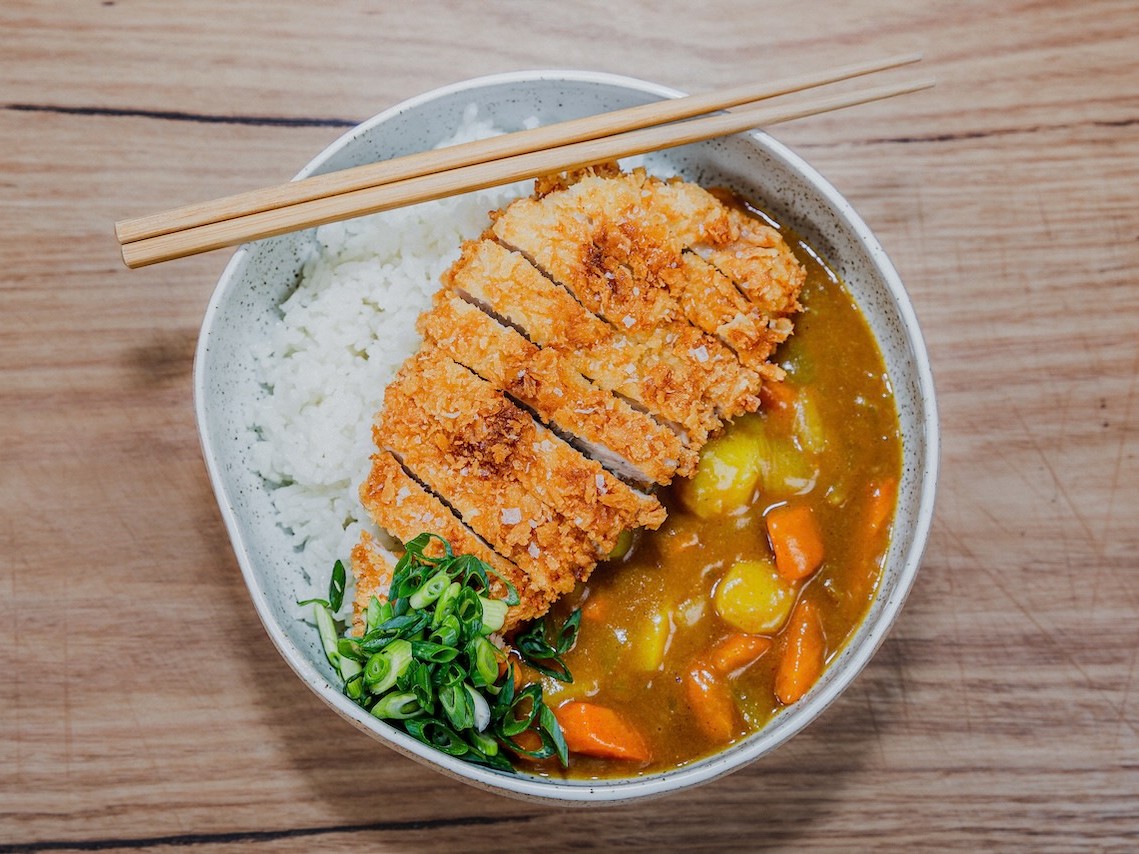
To serve, add the rice in a bowl and the curry next to it, finally slice the chicken katsu and serve on top. Garnish with spring onions and enjoy!
Recipe notes
Chef Tips
Heat the oil before you crumb
Get the oil up to 170°C while the curry is simmering. Crumbed chicken doesn’t hold well sitting around. The egg layer goes soft and the panko slides off if it waits too long before hitting the oil.
Cut the chicken evenly
Slicing each breast in half horizontally gives you four thin pieces of even thickness. That’s the key to katsu that cooks all the way through before the crumb burns. If one piece is thicker, give it a light bash with the side of a knife to even things out.
Storage
The curry keeps in the fridge for 3 days in an airtight container and freezes well for up to 2 months. Reheat gently on the stove with a splash of water to loosen it. The katsu is best cooked fresh as the crumb goes soft once stored. If you have leftover crumbed chicken, fry it from raw when you’re ready to eat.
FAQs
Can I use chicken thigh instead of breast? Yes, and it works really well. Boneless skinless thigh is more forgiving and stays juicier. Pound it to even thickness before crumbing and cook for about the same time.
Is this gluten-free? Not as written. The flour, panko and Golden Curry roux all contain wheat. You can swap in gluten-free flour and gluten-free panko, and S&B does a gluten-free curry roux too, just check the label.
Can I make this vegetarian? Yes, swap the chicken stock for vegetable stock and the katsu for a thick slab of eggplant, tofu or sweet potato, crumbed the same way. The curry itself is already vegetable-based.


