Yukgaejang (Spicy Korean Beef Soup)
Dinner | Korean
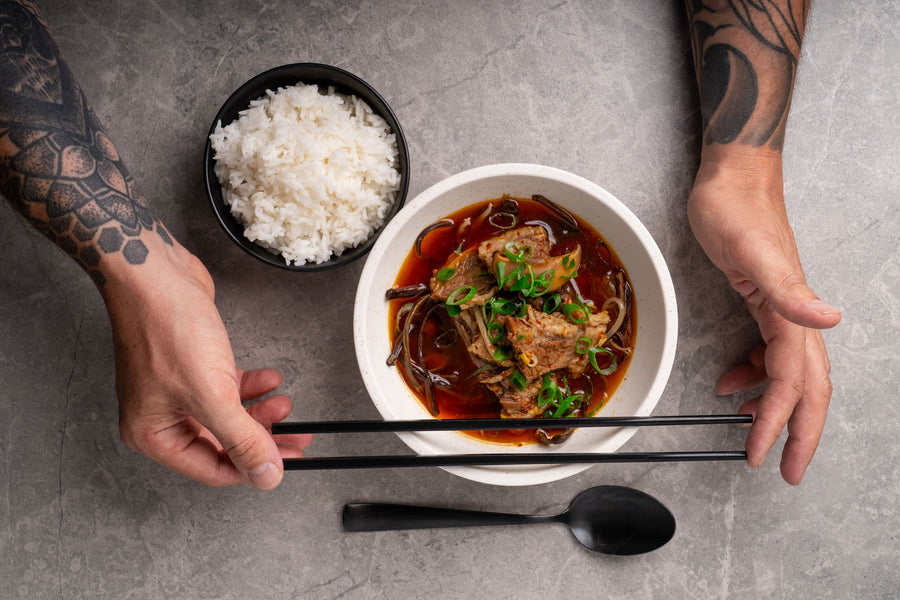
Yukgaejang is a deeply comforting Korean beef soup that earns its place in the cold-weather rotation. Whole brisket braises for two hours with onion, dried shiitake mushrooms and black peppercorns until the broth is rich and the beef is pull-apart tender. The defining flavour is gochugaru, Korean chilli flakes bloomed in sesame oil and garlic before going into the soup, giving it that distinctive deep red colour and a warming heat that builds slowly.
Fernbrake, known as gosari in Korean, is what makes this soup distinctly itself. It’s the dried shoots of the bracken fern, with a chewy texture and an earthy, slightly mineral flavour that works really well against the richness of the broth. It can be an acquired taste, but once you’re into it you’ll understand why it’s been in this dish for so long. If you genuinely can’t find it, you can leave it out and the soup will still be excellent.
This takes time but almost none of it is active. The brisket does its thing for two hours while you get on with something else. Serve straight from the pot with steamed rice on the side.
Ingredients
- 1kg beef brisket
- 1 brown onion
- 3 spring onions
- 4 dried Shiitaki mushrooms
- ½ tsp black peppercorns
- 1 tsp sea salt
- 100g fernbrake (Bracken / Gosari)
- 6 cloves garlic
- 2 tbsp sesame oil
- 3 tbsp Gochugaru
- 200g bean sprouts
- 1 tbsp soy sauce
- 2 tbsp fish sauce
- Steamed rice, to serve
Directions
COOK THE BEEF
- Trim any excess fat from the beef brisket, then place in a large heavy based saucepan.
- Cut the onion in half and cut the whites from the spring onions, reserving the greens for garnish.
- Add the onions, spring onions whites, mushrooms, black peppercorns and salt to the saucepan, then fill with enough water to just cover the beef. Cover with a tight fitting lid and place over a high heat to bring to the boil.
- Reduce the heat to medium and cook for 2 hours, until the brisket is tender.
PREP THE VEGETABLES
- While the beef is cooking, place the fernbrake in a large bowl and cover with warm water. Set aside to soak and rehydrate for at least 1 hour.
- Chop the greens of the spring onion and finely grate the garlic.
- Heat the sesame oil in a small frying pan over medium heat. Cook the garlic for 1 minute, stirring. Add the Gochugaru and cook for a further minute, until aromatic. Remove from the heat.
BRING IT TOGETHER
- Remove the beef and mushrooms from the saucepan and set aside until cool enough to handle. Remove the onion from the broth and discard.
- Slice the mushrooms thinly and slice the beef into 1cm strips.
- Add the mushrooms and beef back into the saucepan and place over a medium heat.
- Drain the fernbrake and add to the saucepan along with the Gochugaru oil mix, bean sprouts, soy sauce and fish sauce. Cover with the lid again and simmer for 10 minutes.
- Uncover and stir through the spring onion greens, reserving a little for garnish.
- Remove the saucepan from the heat and ladle the soup into serving bowls. Serve with some steamed rice on the side and garnish with the reserved spring onions.
Recipe notes
Beef brisket:
Brisket is a tough, well-worked cut that becomes deeply tender with a long braise. Don’t rush the two-hour cook time. The beef is then sliced into strips rather than shredded, so you get good texture in the soup.
Fernbrake (gosari):
The dried shoots of the bracken fern. Find them dried or frozen at Asian supermarkets, usually labelled gosari or bracken fern. They need soaking before use. If you can’t find them, eggplant, spinach stems or enoki mushrooms are reasonable substitutes for a similar earthy, chewy element.
Gochugaru:
Korean coarse chilli flakes with a mild, slightly sweet heat and a vivid red colour. It’s not a direct swap for regular chilli flakes, which are hotter and more bitter. Find it at Asian supermarkets. If substituting, use sweet paprika with a small pinch of cayenne to approximate the heat and colour.
Dried shiitake mushrooms:
Go into the broth from the start to build depth and umami. They’re pulled out with the beef, sliced thinly, and added back in at the end. Don’t skip them, they do a lot of work in the background.
Fish sauce:
Adds a savoury, slightly funky depth that rounds out the broth. Combined here with soy sauce. If you need a pescatarian-friendly version, replace the fish sauce with an equal amount of soy sauce.