Teriyaki Pork
Dinner | Japanese
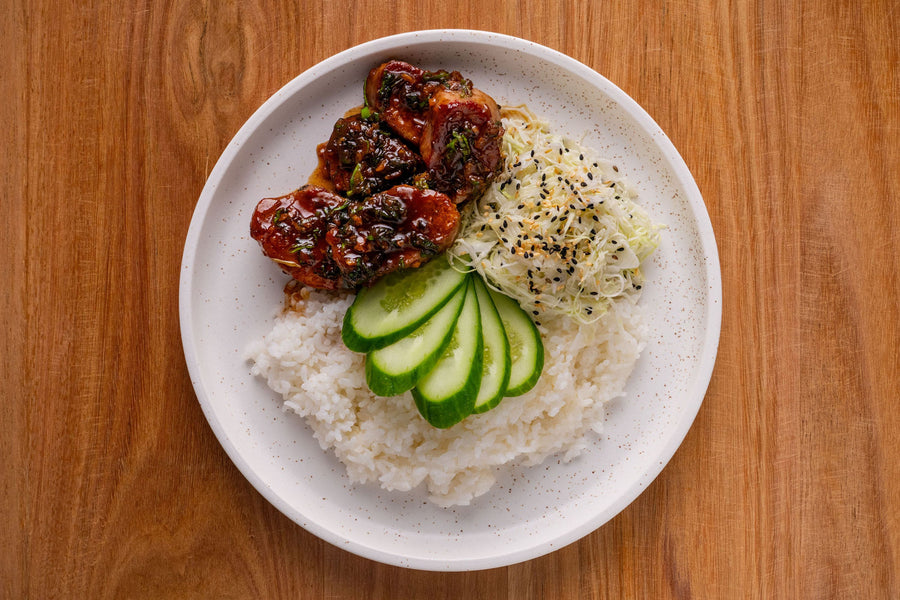
Juicy pork covered in a rich teriyaki sauce and served with rice and cabbage, all done in under 30 minutes! This is a great midweek dinner recipe to make for yourself, your partner and your family.

I don’t often cook with pork during the week as I generally save it for a longer cook on the weekend. However, I’ve been craving it a bit lately so we’re going to make dinner in under 30 minutes using pork tenderloin (also known as pork fillet). The best part of the dish (in my opinion) is the teriyaki sauce which brings so much flavour to this dish and it’s really simple to make.
I made this for Katelyn recently and I think it’s now her new favourite dish as she keeps on requesting it. This recipe will take you through the steps, as well as provide a little extra guidance on the ingredients, techniques and method.
I’ll try to do a few more of these 30 minute meal ideas because I know that’s all the time I have during the week to make dinner.
What is teriyaki?
Teriyaki originates from a 17th century Japanese cooking technique, where teri (luster) and yaki (grill) combine to create a sweet, glossy sauce traditionally used for grilled fish. The combination of soy, mirin, sake and honey creates an incredible flavourful that works so well as a glaze. Over time, pork and other meats were introduced. This version with pork tenderloin is a great example of how simple, quality ingredients and a good sauce can make an incredible meal in under 30 minutes.

Ingredients
- 2 pork tenderloins (approximately 800g)
- sea salt to season
- 2 tbsp peanut oil
- 3 garlic cloves
- 2 spring onions
- 2 tbsp sake
- 90ml soy sauce
- 90ml mirin
- 1 ½ tbsp honey
- 1 ½ tsp sesame oil
- TO SERVE
- 2 cups (400g) short-grain rice
- 500ml (2 cups) water
- ¼ green cabbage
- 1 tsp sesame oil
- sea salt, to season
- 2 tsp rice vinegar
- 1 tbsp toasted sesame seeds
- 1 Lebanese cucumber
Directions
COOK THE RICE
- Place the rice in a fine colander or sieve and rinse under cold water until the water runs clear.
- Transfer to a rice cooker with the water and turn on to cook.
- When the rice cooker finishes, leave the rice to steam for 10 minutes before serving.
COOK THE PORK
- Trim the silver skin from the pork tenderloins. Cut into medallions approximately 3cm thick. Season well with salt and white pepper.
- Heat half the peanut oil in a large frying pan over medium-high heat. Add the pork and cook for 3 minutes, turning, until well seared on both sides.
- Transfer to a tray and set aside
COOK THE SAUCE
- Finely chop the garlic, then finely chop the whites of the spring onions. Thinly slice the greens of the spring onion and set aside.
- Heat the remaining oil in the pan over medium heat. Add the garlic and spring onion whites. Cook for 1-2 minutes to soften.
- Deglaze the pan with the sake, scraping off the fond from the base. Stir in the soy, mirin, honey and sesame oil. Stir well and bring to a simmer.
- Return the pork to the pan and increase the heat to medium-high. Turn the pork in the sauce to glaze all over and cook for a few minutes, until the sauce thickens.
- Turn off the heat and stir through the greens of the spring onions.
FINISH AND SERVE
- Finely shred the cabbage, lightly toast the sesame seeds and combine in a large bowl. Pour over the sesame oil, rice vinegar and season with some salt, toss well to combine. Thinly slice the cucumber.
- To serve, divide some steamed rice between serving plates, then add some of the cabbage on the side and the cucumber.
- Top with the pork and drizzle with the sauce.
Recipe notes
Pork tenderloin:
this cut is taken from the loin and it's a long, lean cut of pork. Alternative pork cuts you can use are pork chops, diced loin or pork belly. You can also switch pork out completely and make it with chicken thighs or beef (like flank steak).
Short grain rice:
is also known as sushi rice and can be purchased at major supermarkets and Asian grocers.
Soy sauce:
I always recommend using a good quality soy sauce which I generally shop for at the Asian supermarket.
Peanut oil:
as there’s so many flavours going on in this dish, I like to use peanut oil as my cooking oil as it has a neutral flavour. If you prefer to cook with olive oil, it will still taste good.
Rice vinegar and sesame oil:
these are used to add balance and acid to the cabbage that we’ll serve on the side. You’ll be able to find both of these in a major supermarket or your local Asian grocer.