Salt and Pepper Squid
Lunch | Chinese
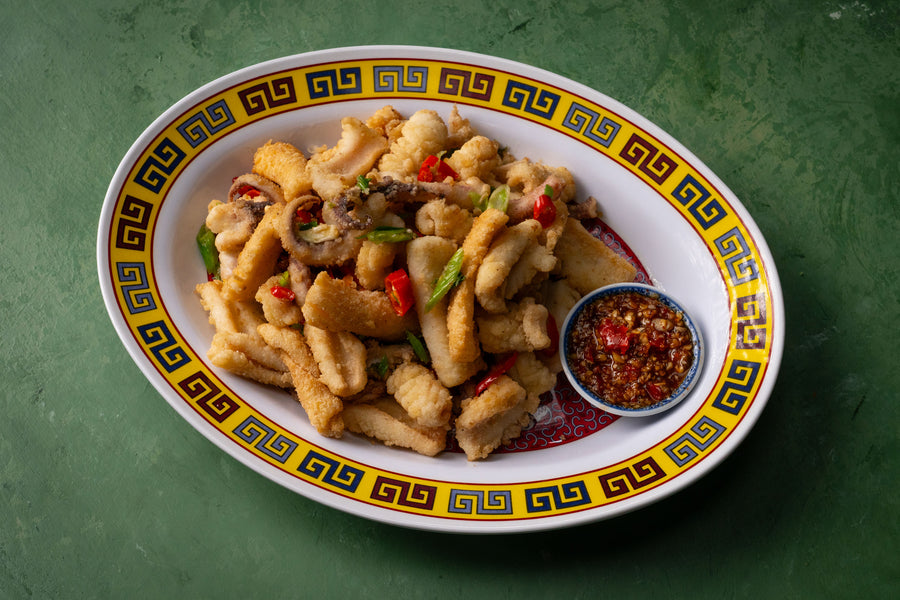
Salt and pepper squid shows up on almost every pub and restaurant menu in Australia, and this version is Cantonese-style. The squid is coated in rice flour, fried until crisp, then tossed through a hot wok with garlic, chilli and spring onion and seasoned with white pepper and MSG. I pair it with a homemade sweet and sour dipping sauce that is tangy, a little spicy, and cuts straight through the richness of the fried squid.
Most versions in Australia come with lemon and aioli, which is closer to the Italian fritto misto style. I prefer the Cantonese approach: deeply savoury, a little sticky from the wok, and finished with that sharp heat from the white pepper. The key to getting it right at home is hot oil, dry squid, and serving it straight from the wok the moment the coating is still crispy.
Ingredients
- SQUID
- 500g squid, cleaned
- 1 egg
- 1 tbsp Chinese cooking wine
- 300g rice flour
- sea salt and ground white pepper, to season
- peanut oil (or other neutral oil) for deep frying
- 4 cloves garlic
- 2 long red chillies
- 6 spring onions
- 1g MSG
- SWEET & SOUR SAUCE
- 12 cloves garlic
- 2 long red chillies
- 2 long green chillies
- 50g caster sugar
- 100ml rice wine vinegar
- 2g chilli flakes
- 10g sea salt
Directions
MAKE THE SAUCE
- Finely chop the garlic and chillies and place in a medium saucepan. Add the sugar, vinegar, chilli flakes and sea salt and place over a high heat.
- Bring to a boil, then reduce the heat to medium and simmer for 5 minutes, until the sauce starts to thicken.
- Transfer the sauce to a sterilised jar and set aside to cool.
PREP THE SQUID
- Separate the squid tubes from the tentacles. Cut the tentacles off just below the beak. You can feel the hard little nub where the tentacles meet. Discard the beak and anything above it.
- Reach inside the tube and pull out the clear plastic-like quill (also called the pen). Discard it. Peel away and discard the thin purple membrane from the outside of the tubes. It should pull off easily with your fingers or the tip of a knife.
- Run a sharp knife through the tube to open it up flat. Pat the inside dry with paper towel.
- Score the inside squid tubes with a diamond pattern 3-5mm wide. Slice the tubes lengthways into 3 long thick strips, then into 5cm (2 in) wide pieces. Slice the tentacles into bite sized pieces, scraping away as many of the suckers as you can so they fry cleanly.
- Add the squid to a bowl with the egg and Chinese cooking wine and mix well.
- Place the rice flour in a large bowl and season with salt and white pepper . Toss the squid slices in the rice flour, until they are completely coated. Leave on a wire rack over a tray until ready to cook.
COOK THE SQUID
- Preheat the peanut oil to 180°C (355°C) in a deep fryer or deep pan.
- While the oil is heating, finely chop the garlic, and thinly slice the red chillies and green onions.
- Heat a dry wok over high heat. Add the garlic, chillies and green onions and stir fry briefly until fragrant, then leave in the wok.
- Deep fry the squid in batches for 2-3 minutes, until golden brown and crispy. Drain on a wire rack over a tray.
- Add the squid to the wok with the garnish. Season with salt, white pepper and MSG. Toss quickly to coat, then serve immediately with the sauce on the side for dipping.
Recipe notes
Squid:
Buy whole squid from a fishmonger and ask them to clean it, which saves a lot of prep work. A 500g cleaned weight typically requires around 700g whole. You can also buy pre-cleaned squid tubes if you don’t want to deal with the tentacles. Either way, dry the squid well with paper towel after cleaning. Any surface moisture will stop the rice flour coating from sticking properly and the result will be soggy rather than crispy.
Rice flour:
Rice flour is what gives the coating that light, crispy texture. It absorbs less oil than plain flour and stays crunchier for longer once fried. Look for it in Asian grocery stores or the health food aisle of most supermarkets. Don’t substitute plain flour as the coating will be noticeably heavier and less delicate.
Chinese cooking wine:
Shaoxing wine adds depth and savouriness to the squid before frying. Dry sherry is a good substitute if you can’t find it. It’s widely available at Asian grocery stores.