Pellet Smoker Brisket
Dinner | American
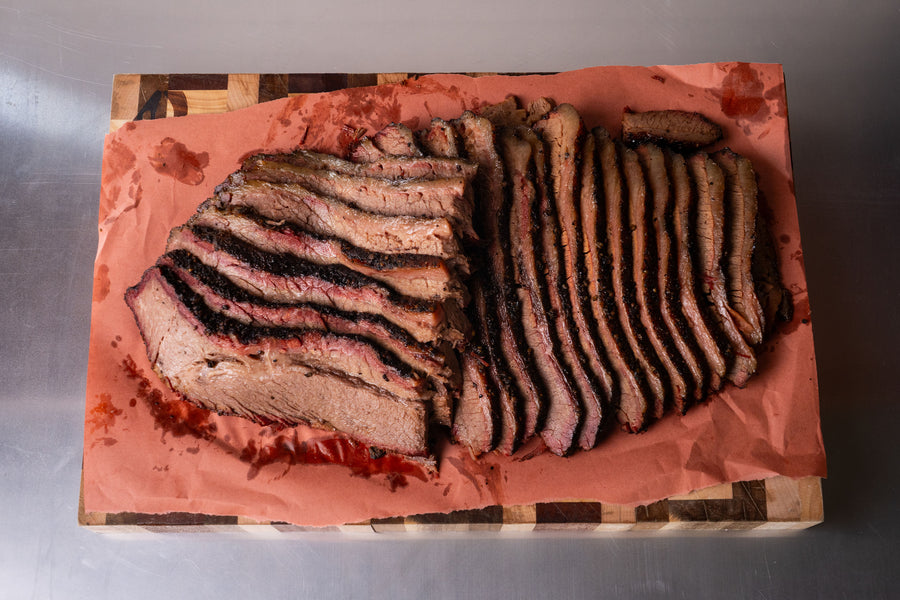
So I wanted to create a recipe that focuses on cooking brisket in a pellet smoker instead of an offset smoker. Now, I've cooked dozens of briskets in my offset smoker and it is so delicious but it’s a pain as you have to stoke the fire every 20 minutes for at least 12 hours. Whereas with a pellet smoker, you can kind of set and forget.
We’re doing a Texas style brisket today with yellow mustard as the binder and seasoning it with salt and pepper, that’s it. I set my pellet smoker to 107°C and we’re going to cook it all the way through to 73°C. Then we’ll wrap it in butcher's paper and put it back in the smoker until it reaches 95°C. After it’s cooked, it needs to rest to allow the moisture and fat to redistribute throughout the meat (about 6-8 hours). Once that’s done just carve it up and you have a beautiful, moist brisket with a great crust on the outside.

My thoughts on offset vs pellet
The pellet smoker is so much easier to use as you don’t have to tend to it as much and it’s easier to set up. However, if you’re wanting a real smoking experience you’ll get that from the offset. Taste wise I think they’re both incredible and super juicy, but the offset does give you a better bark.
If you're new to BBQing, I suggest you give the pellet smoker a go and I don’t think any of your guests will taste the difference.
Times
You need to allow yourself about 34 hours from prep to ready for this brisket, here's why:
Prep will take 30 minutes then it needs to marinate overnight (at least 12 hours)
The total cook time is 10-12 hours depending on the size of the brisket
You'll then need to rest it for 8 hours before you carve and serve
I would generally prep this on a Friday lunch/afternoon and then get it on the smoker early Saturday to cook all day, let it rest overnight on Saturday and its ready for Sunday lunch.
Ingredients
- 6-7kg packer brisket
- ½ cup cooking sea salt (or Kosher salt)
- ½ cup coarsely ground black pepper
- ⅓ cup yellow mustard
- ¼ cup beef tallow
Directions
DAY 1
- Trim the brisket of excess fat to make the top smooth. You want roughly a 6mm (¼ inch) fat cap over the top, and you want to have the brisket in the most aerodynamic shape possible (save the trimmings for sausages or burgers).
- Mix the salt and pepper in a small bowl. Rub one side of the brisket with half of the mustard, then season heavily with half of the salt and pepper mix. Turn the brisket over and repeat on the other side, making sure you get the sides of the brisket also.
- Place the brisket on a wire rack over a tray and refrigerate, uncovered, overnight.
DAY 2
- Preheat a pellet smoker to 110°C (225°F). Note: most pellet smokers operate in 5°C increments, so 110°C is the closest setting to the target of 107°C and will give the same result. Place the brisket in the centre of the smoker, fat side facing up.
- Smoke the brisket until the internal temperature reaches 73°C (165°F), approximately 5-8 hours, depending on the thickness of the brisket piece.
- Remove the brisket and place on a board. Rub the outside with the beef tallow, then wrap the brisket up tightly in several layers of butchers paper.
- Return the beef to the smoker and continue cooking until the internal temperature reaches 96°C (205°F) (the brisket should feel like soft butter when probed), approximately 3-5 hours (again it depends on the size of your brisket.
- Remove the brisket and leave it to rest in a 50°C (122°F) oven without the fan. Alternatively, you can wrap it in clean tea towels and place in an esky. Leave it to rest for 6-8 hours.
DAY 3/ONCE IT’S RESTED
- Unwrap the brisket and transfer to a clean board. Slice into 10mm (⅜ inch) thick slices and serve warm with some BBQ sauce and your favourite BBQ side dishes.
Recipe notes
Packer brisket:
this is a cut of beef that has the point and the flat. It’s a cut that’s pretty much only used for BBQ. Head to your butcher and ask for a nice oval shaped brisket with a good consistent fat cap on it.
Yellow mustard:
You want American mustard.
Tallow:
Rubbing the brisket with tallow before wrapping adds fat back to the bark and helps keep the surface moist during the second phase of the cook. You can render your own from the trimmings or buy it pre-made from a good butcher. Lard works as a substitute if you can’t find tallow.