Confit Garlic and Lemon Thyme Focaccia
Lunch | Italian
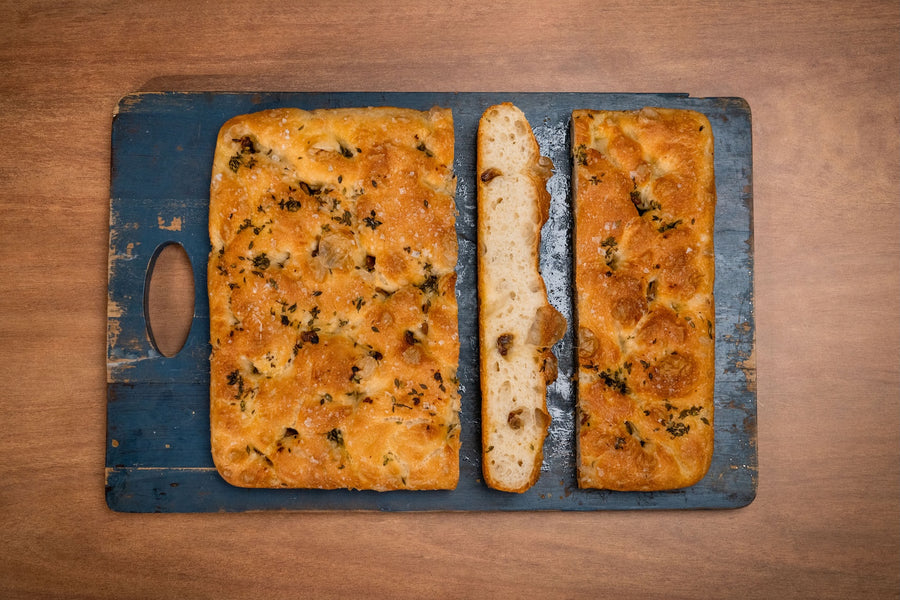
If you’ve never baked bread before, this is the one to start with. No fancy gear, no stress, just a super simple dough, some patience, and a tray of golden, garlic-loaded glory at the end.
Focaccia has a high-hydration dough, which means it’s wetter and stickier than a standard bread dough, and instead of kneading it relies on a stretch-and-fold technique that builds gluten structure gradually over a series of rest periods. There’s no shaping involved: the dough goes straight from the bowl into a generously oiled tray and spreads itself out. The process is slow but largely hands-off, and the result is a thick, airy loaf with a crisp, olive oil-fried underside and a soft, open crumb.
We'll make confit garlic and lemon thyme while the dough is doing its rests. Confiting whole garlic bulbs at 140°C for 90 minutes converts the sharp, raw allium character into something sweet, nutty, and deeply savoury. The cloves are pressed directly into the dough before baking so they’re embedded rather than just sitting on top, and the flavoured oil from the roasting dish is drizzled over the dough as well.
Ingredients
- 7g (2¼ tsp) dry yeast
- 475ml (16 fl oz) warm water (32°C/90°F)
- 600g (1 lb 5 oz) bread flour
- 12g (2½ tsp) fine sea salt
- 40ml (¼ cup) olive oil
- sea salt flakes
- CONFIT GARLIC
- 4 whole bulbs of garlic
- 100ml olive oil
- 4 sprigs lemon thyme, leaves picked
- salt and pepper, to season
Directions
PREP AND PROOF DOUGH
- Place the yeast in a large bowl and mix in water until dissolved.
- Pour in 20ml olive oil and add the flour and salt. Mix until well combined. Cover the bowl with a tea towel and let it rest for 30 minutes.
PREP CONFIT GARLIC AND OIL
- Preheat the oven to 140°C fan forced (285°F). Trim the tops off the garlic bulbs and place in an oven proof dish. Drizzle with the 100ml of olive oil and season with salt.
- Roast in the oven for 1.5 hours, until very soft and caramelised, then set aside to cool.
- Pour the oil off into a medium bowl and mix with the thyme leaves. Squeeze garlic from skins and keep separate.
STRETCH AND FOLD DOUGH
- Uncover the dough, then with a wet hand, stretch one corner of the dough and fold it over itself. Repeat 4 times until the dough is completely folded over itself.
- Cover again with a tea towel and let it rest for another 30 minutes. Repeat this process three more times.
- After the fourth and final round of stretching and folding, let the dough rest for 30 minutes.
BAKE AND SERVE
- Increase the oven temp to 220°C (428°F).
- Grease a heavy based 22x33cm baking tray with 20ml olive oil. Transfer dough to the tray and spread out to the edges with lightly oiled hands. Cover again and allow to rise for 30 minutes.
- Remove the tea towel and drizzle the thyme oil over the dough.
- Place the garlic cloves over the top of the dough, then use your fingers to create dimples throughout the dough, pressing the garlic cloves into the dough to hide them.
- Season with sea salt flakes, then place the bread in the oven. Turn the oven down to 200°C (428°F) and bake for 20-25 minutes or until golden brown and cooked through.
- Transfer bread from tray to a wire rack to cool a little then slice up and serve!
Recipe notes
Bread flour:
Bread flour has a higher protein content than plain flour (around 12-13% vs 10-11%), which forms more gluten and gives the focaccia its chewy, open crumb. Plain flour will work as a substitute but the texture will be denser and less structured. Strong bread flour, baker’s flour, and high-grade flour are all the same product under different names.
Olive oil:
Olive oil is used three ways here: mixed into the dough, used to grease the baking tray, and as the base for confiting the garlic. The quality matters most in the garlic confit oil, which is drizzled directly over the bread before baking. A good extra virgin olive oil will make the finished loaf taste noticeably better than a light or blended oil. Don’t be tempted to reduce the amount on the tray: the generous olive oil base is what gives focaccia its distinctive crisp, almost-fried underside.