Crispy Double Cooked Chips
Snack | French
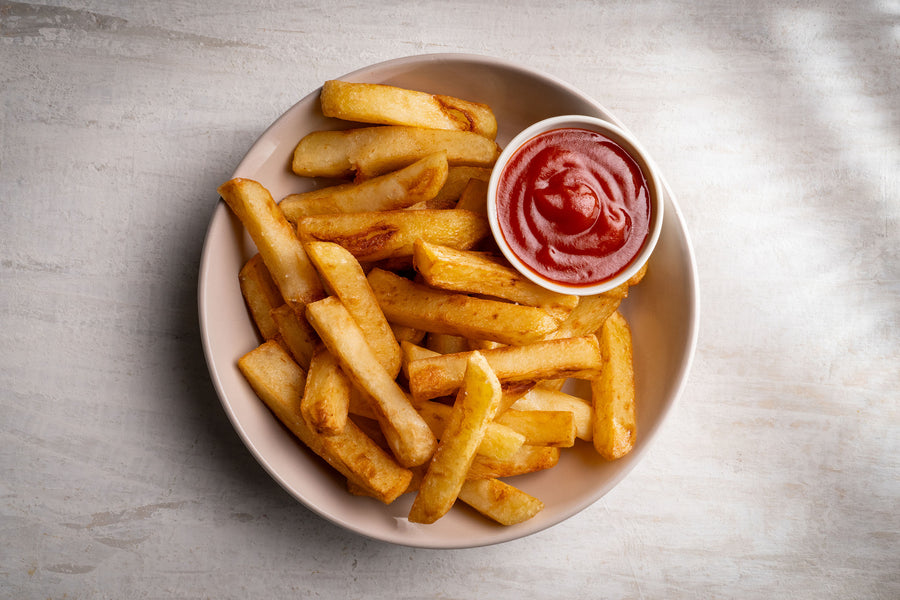
This is how I make proper chips at home. This is the double cook method where we parboil first to cook the potato all the way through and rinse out the starch, dry the chips out completely, then deep fry in hot fat. You end up with a crisp golden crust and a fluffy interior. Vinegar in the parboil water stops the chips falling apart while they cook, and the cool-down before frying is what gives you the crackling outside.

My Chips Explained
The potato
Floury, high-starch potatoes are what you want here. Sebago, Russet Burbank, King Edward and Dutch Creams all work, they cook fluffy on the inside and crisp on the outside. Waxy potatoes like Nicola or Carisma will hold their shape too well and you won’t get the proper texture. Cut them at 1.5cm thick, that’s the sweet spot between thin chips that turn into shoestrings and wedges that stay too soft in the middle.
The parboil
Parboiling cooks the potato all the way through before it ever sees hot oil, which is the key to a fluffy interior. We add vinegar to the water for two reasons: it keeps the chip shape intact while it boils (the acid stiffens the pectin in the potato cell walls), and it pulls out a bit more starch which means crispier chips after frying. Cook them until they’re completely soft, almost falling apart at the edges, then dry them out fully on a wire rack before they go anywhere near oil.

The fry
Frying at 200°C in beef tallow or a tallow and peanut oil mix is what gives you that proper chippy flavour. The high temperature blasts the surface dry and locks in the crackle while the inside stays soft. Beef tallow has a higher smoke point than vegetable oils and gives a rounder, savoury flavour, but a 60/40 peanut oil to tallow blend works great too. Don’t crowd the pot, the oil temperature drops the second too many chips go in and you’ll end up with greasy chips.
Ingredients
- 1.5kg (3¼ lbs) potatoes (Sebago, Russet Burbank, King Edward, or Dutch Creams)
- 5 tbsp white vinegar
- salt, to taste
- 3L (3.2 quarts) peanut oil
- 2L (2.1 quarts) beef tallow
Directions
- Peel the potatoes and slice them into chips, 1.5cm (2/3-inch) thick and as long as the potatoes allow.
- Place the cut chips into plenty of fresh cold water, mix well, and let them soak for 20 minutes.
- After 20 minutes, drain the chips and replace with fresh water, ensuring they are completely covered.
- Measure the water used (e.g., 5 litres (5.3 quarts) for this recipe).
- For every litre (quart) of water, add 1 tablespoon of white vinegar (e.g. 5 litres of water = 5 tablespoons vinegar) and a generous pinch of salt.
- Place over high heat, cover, and bring to a gentle simmer.
- Cook the chips until completely soft, stirring every 4–5 minutes for even cooking.
- Once fully cooked, carefully remove the chips and place them onto a tray with a wire rack.
- Use an oscillating fan or allow them to cool completely to dry out faster (this step helps achieve a crispier texture).
- The chips can be stored in the fridge for up to 4 days before frying.
FRYING THE CHIPS
- When ready to fry, add the beef tallow and peanut oil to a deep pot and heat to 200°C (390°F).
- You can use all peanut oil, all beef tallow, all duck fat, or a mix (e.g. 3 litres peanut oil + 2 litres beef tallow).
- Once the oil reaches 200°C (390°F), fry the chips in small batches, ensuring not to overcrowd the pan.
- Fry until golden brown and crispy, then remove and place on a tray lined with paper towels.
- Season immediately with plenty of salt and serve hot.
Recipe notes
Potatoes:
Floury, high-starch varieties are essential. Sebago is the standard chip potato in Australia and what I usually grab. Russet Burbank, King Edward and Dutch Creams are all good alternatives. Avoid waxy varieties like Nicola or Carisma, they hold their shape too well and won’t fluff up.
Beef tallow:
This is the secret to proper chippy flavour. Rendered beef fat fries at higher temperatures than vegetable oils and gives a savoury depth you don’t get from peanut or canola alone. Buy it from a butcher or render your own from beef trimmings. Tallow from a quality source is worth the effort.
White vinegar:
Cheap distilled white vinegar is what you want, not malt or wine vinegar. The acid sets the pectin in the potato so the chips hold their shape during the long parboil. The vinegar flavour cooks off completely.