7 Hour Slow Cooked Lamb Shoulder
Dinner | British
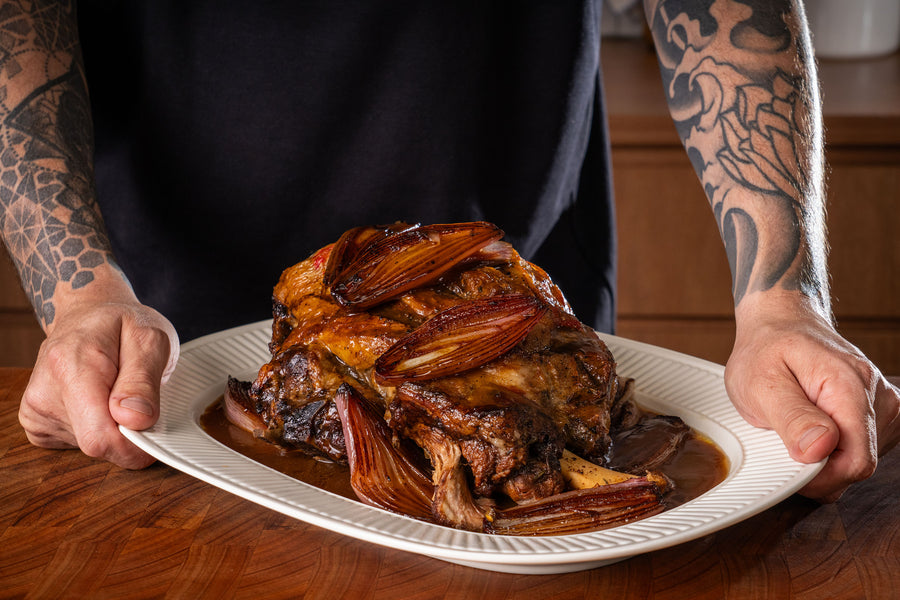
This is one of my favourite cuts of meat of all time - the lamb shoulder. Now, if you don’t love lamb, you can follow this recipe and swap the lamb out for beef shin or chuck beef. We’re going to serve it with braised shallots which is another one of my favourite things. Make this for your next pot luck and be the person that brought everyone’s favourite dish.
This is a 7 hour slow cooked lamb shoulder, which uses the technique called braising. Braising is a fantastic thing to learn how to do and it’s not complicated. The best thing about braising or slow cooking is that there’s room for error, as we’re cooking it for so long, it’s unlikely that you’ll over cook it or undercook it.

Braised Lamb Shoulder Explained
The cut
Bone-in lamb shoulder is the cut you want. The bone adds flavour and the connective tissue around it breaks down into gelatin during the long braise, which is what gives the gravy its body. A 1.2kg shoulder will feed 6 generously. If you don’t love lamb (no judgement), you can swap in beef shin or chuck beef and use the same recipe, just check tenderness at the 6 hour mark.
Searing and the maillard crust
This is the cheffy bit and it’s worth taking the time. Score the fat cap in a diamond pattern (optional but it helps the fat render evenly), season the lamb hard with salt and sear it on every side in a hot dutch oven until it’s deeply browned. We want the maillard reaction, which is the proteins on the surface changing and creating that savoury, umami flavour. The fat cap needs to be properly rendered before the lamb goes into the braise.
The braise
After searing the lamb, we use the same pan for the mirepoix. Cut the carrot on an angle for maximum surface area, quarter the onion, and brown them off in the leftover lamb fat. Pour off most of the fat, deglaze the pan with balsamic vinegar to lift the caramelised bits off the bottom, then top up with chicken stock and tuck the lamb back in with thyme. Cover with a tight lid and into a 100°C oven for 7 hours. The low temperature is the secret, no aggressive bubbling, just a gentle render of all the connective tissue over hours.
Braised shallots
Banana shallots are sweeter and longer than regular shallots, and they hold their shape when cooked. We halve them lengthways with the root intact, sear them cut-side down in butter and olive oil, deglaze with balsamic and finish under a cartouche in the oven. The cartouche keeps the steam in so the shallots cook through without drying out. They’re the perfect counterpoint to the rich lamb.
Ingredients
- 1.2kg lamb shoulder, bone in
- sea salt and cracked black pepper,, to season
- 1 tbsp olive oil
- 1 carrot
- 1 brown onion
- 150ml balsamic vinegar
- 1L chicken stock
- 1 small bunch of thyme
- 1 tbsp corn flour (cornstarch)
- mashed potatoes and steamed greens, to serve
- BRAISED SHALLOTS
- 6 banana shallots
- 1 tbsp olive oil
- 40g butter
- 50ml balsamic vinegar
Directions
SEAR THE LAMB
- Score the lamb on the top in a diamond pattern. Season on all sides with salt. Heat the oil in a heavy based saucepan or Dutch oven over medium-high heat.
- Sear the lamb on all sides, until well browned and the fat cap has rendered, about 15 minutes. Remove from the pan and set aside, leaving the oil and fat in the pan.
COOK THE VEG AND LAMB
- Preheat the oven to 100°C fan forced (210°F).
- While the lamb is searing, peel and slice the carrot into chunks, then chop the onion into quarters.
- Then, once you’ve taken the lamb out of the pan, add the carrot and onion to the same pan over medium heat and cook, without turning, until starting to caramelise. Turn and cook on the other side.
- Remove the vegetables from the pan and set aside. Pour off most of the lamb fat that’s in the pan.
- Return the lamb to the pan, skin side up, and the vegetables around the lamb, then add the thyme (reserving 3 sprigs for later) and season well with black pepper.
- Deglaze the pan with 150ml of the balsamic vinegar, for 30 seconds, until cooked off a little.
- Pour in the stock and cover with a tight fitting lid. Transfer to the oven and cook for 7 hours (checking it after 6 hours).
COOK THE SHALLOTS
- Increase the oven temperature to 180°C fan forced (355°F).
- Peel the banana shallots, taking care to keep the root intact. Halve lengthways. Season the cut sides with salt.
- Place the oil and butter in a frying pan over medium heat. Add the shallots, cut side down and place the thyme sprigs around and cook for 2-3 minutes.
- Deglaze the pan with the remaining 50ml balsamic vinegar, then cover the shallots with a cartouche.
- Transfer to the oven and bake for 15 minutes. Remove from the oven and discard the cartouche.
MAKE THE SAUCE AND SERVE
- Remove the lamb from the oven and transfer to a serving platter.
- Pass the cooking liquid through a sieve into a medium saucepan. Place over a medium heat and bring just to a boil. Taste for seasoning.
- Make a slurry with the cornflour and 1 tablespoon of water. Whisk into the lamb sauce and cook for 1-2 minutes until the sauce thickens slightly.
- Carefully transfer the shallots to the serving platter with lamb. Drizzle with some of the gravy, then serve the rest on the side.
- Serve with a side of mashed or roast potatoes and some steamed green beans.
Recipe notes
Lamb shoulder:
Bone-in is essential. The bone adds flavour and the connective tissue around it gives the gravy its body. Ask your butcher for a 1.2 to 1.5kg shoulder, preferably with the fat cap on. A boneless shoulder will work in a pinch but you’ll lose some of the richness.
Banana shallots:
Long, slim shallots that look like a cross between a shallot and a small onion. They’re sweeter than brown onions and hold their shape better than regular shallots once braised. If you can’t find them, large French shallots are the closest substitute.
Balsamic vinegar:
A mid-range supermarket balsamic is fine here. The vinegar gets reduced and rounds out the gravy with sweetness and acidity. Don’t waste your good aged balsamic on this, save that for drizzling at the table.